
 See Our Latest Article on HelloNation
What does “texting thumb” mean?
“Texting thumb” is an informal term for pain, soreness, stiffness, or cramping linked to repeated thumb use. It is not a single medical diagnosis. In some cases, the discomfort comes from tired muscles. In others, it may involve irritation of the tendons near the thumb-side of the wrist, often called de Quervain’s tenosynovitis.
The problem can develop from more than texting. Scrolling, gaming, typing, gripping tools, knitting, carrying a child, opening jars, and extended phone use may place similar demands on the thumb and wrist.
For residents of Ithaca, repeated hand use can also combine with seasonal activities such as gardening, snow removal, home maintenance, or prolonged computer work. The phone may be the activity that makes symptoms noticeable, rather than the only cause.
What are the usual symptoms?
The most common symptom is aching or sharp pain near the base of the thumb or along the thumb side of the wrist. Pain may increase when gripping, pinching, lifting, turning a key, opening a container, or moving the thumb across the palm.
Other possible signs include:
- Tenderness or mild swelling at the thumb-side wrist
- Stiffness after waking or after holding a phone
- A feeling of weakness when gripping
- Pain that extends a short distance into the forearm
- Clicking or catching of the thumb
- Cramping after repeated scrolling or typing
Symptoms that continue even when the hand is resting deserve more attention than occasional fatigue after a long message. Numbness, tingling, or burning may suggest nerve irritation rather than a tendon problem.
How can texting thumb be managed at home?
The first step is to reduce the movements that repeatedly provoke pain. Complete immobility is not always necessary, but continuing to push through sharp pain can prolong irritation.
Try these practical changes for several days:
- Use voice-to-text, dictation, or a computer for longer messages.
- Hold the phone with both hands instead of operating it with one thumb.
- Alternate hands when possible.
- Keep the wrist in a relaxed, fairly straight position rather than bent toward the little-finger side.
- Take short breaks every 10 to 15 minutes during extended phone use.
- Avoid gripping the phone tightly or balancing it on the small finger.
- Reduce gaming, scrolling, and repetitive swiping until symptoms settle.
- Use larger text and accessibility features so less precise thumb movement is needed.
A cold pack wrapped in a thin cloth may help with soreness after activity. Apply it for about 10 to 15 minutes, then allow the skin to return to normal temperature. Do not place ice directly against the skin.
If stiffness is the main issue and there is no visible swelling, gentle warmth may feel more comfortable. Stop any approach that increases pain, tingling, skin irritation, or swelling.
Would a thumb brace help?
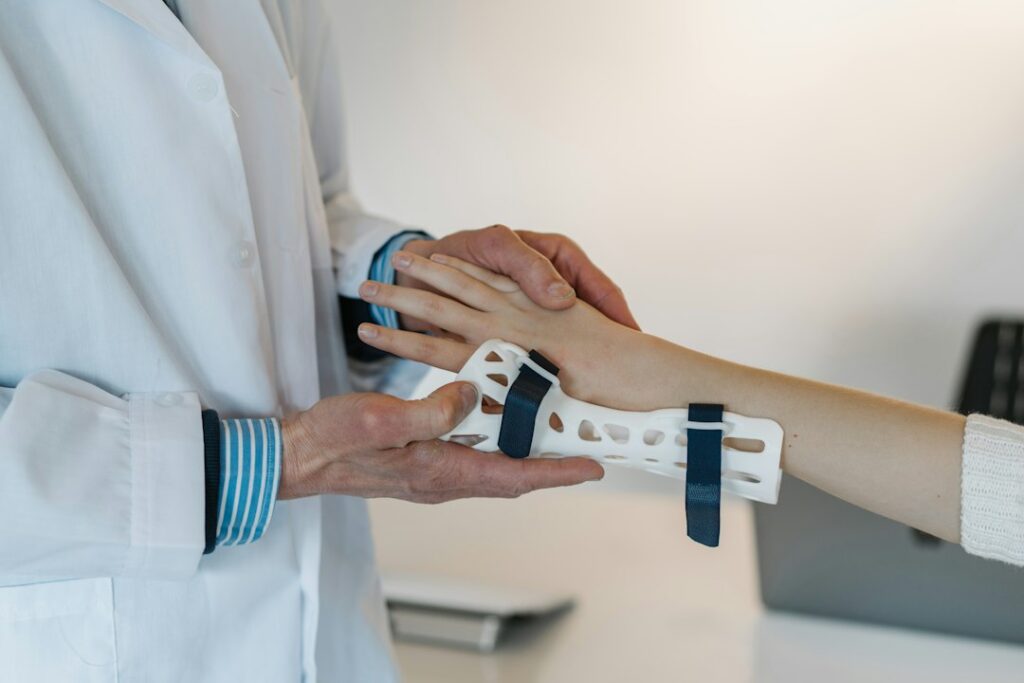
A thumb-spica brace can limit movement of the thumb and wrist and may reduce irritation during daily activities. It should feel supportive rather than tight. Excessive pressure, numbness, color changes, or increased throbbing are signs that it should be removed.
A brace is generally most useful for short-term protection while activity is being modified. Wearing one continuously for a long period without guidance may contribute to stiffness and weakness. It also should not be used to mask worsening symptoms while normal aggravating activities continue.

During cold Ithaca weather, gloves and bulky outerwear can make it tempting to grip a phone more firmly or bend the wrist awkwardly. Keeping the device accessible and using voice controls can reduce that extra strain.
Should stretching or exercises be used?
Gentle movement can help maintain comfortable range of motion, but aggressive stretching is not a good response to sharp thumb-side wrist pain. Early exercises should stay within a comfortable range and should not create lingering soreness later in the day.
Simple options may include:
- Slowly opening and closing the hand without force
- Moving the thumb away from the palm and returning it
- Making small, relaxed wrist movements
- Gently squeezing a soft object only if gripping is comfortable
Strengthening is usually more appropriate after everyday pain has decreased. Exercises that repeatedly reproduce the original pain should be paused. A clinician or rehabilitation professional can help distinguish tendon irritation from joint, nerve, or ligament problems when the cause is unclear.
Can over-the-counter pain medicine be used?
Some people use nonprescription anti-inflammatory medicines or acetaminophen for short-term relief. These medicines are not appropriate for everyone. Anti-inflammatory drugs can be unsafe with certain stomach, kidney, heart, blood pressure, pregnancy, or blood-thinning concerns. Acetaminophen may be unsafe with some liver conditions or when combined with other products containing acetaminophen.
Read the label carefully and ask a pharmacist or medical clinician if there is uncertainty about interactions, dosing, or whether a medication is suitable. Pain relief should support reduced strain, not make it easier to continue the activity that caused the problem.
When should thumb or wrist pain be evaluated?
Consider an evaluation if symptoms are not improving after one to two weeks of reduced aggravating activity, or if pain is interfering with sleep, work, driving, cooking, or other routine tasks. A persistent problem may need a more specific diagnosis and a structured treatment plan.
Prompt medical attention is appropriate after a fall, direct impact, sudden loss of strength, significant swelling, deformity, or inability to move the thumb. Evaluation is also warranted for spreading redness, warmth, drainage, fever, marked numbness, or a hand that becomes unusually pale, blue, or cold.
Pain on the thumb side of the wrist can resemble arthritis, a sprain, nerve irritation, trigger thumb, or other conditions. A simple self-test found online cannot reliably identify the cause, and repeatedly provoking pain to “check” it may worsen irritation.
What role can chiropractic or hands-on care play?
A chiropractor may assess contributing movement patterns in the wrist, forearm, elbow, shoulder, and neck and may use gentle manual techniques or exercise-based care as part of a broader plan. That type of care should complement activity modification rather than replace evaluation when symptoms are severe, traumatic, neurological, or steadily worsening.
The most useful plan depends on the actual source of pain. Tendon irritation, thumb arthritis, nerve compression, and an injury may require different approaches. Clear communication about symptom location, duration, phone habits, work demands, and seasonal activities helps guide that decision.
For many people, the practical starting point is simple: reduce repetitive thumb motion, change how the phone is held, protect the wrist during painful tasks, and return gradually to normal use once movement becomes comfortable.
