
 See Our Latest Article on HelloNation
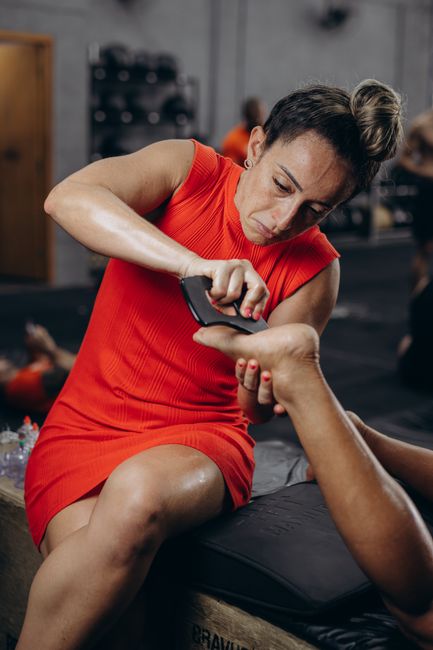
What is the Graston Technique?
The Graston Technique is a form of instrument-assisted soft-tissue mobilization, often abbreviated as IASTM. It uses smooth, handheld tools to apply controlled pressure and gliding strokes over muscles, tendons, fascia, and areas of scar tissue.
In chiropractic care, the technique is generally used as an addition to an examination, exercise plan, joint mobility work, or other conservative treatment. It is not a separate diagnosis, and it is not intended to replace medical evaluation when symptoms suggest a fracture, infection, nerve problem, or other serious condition.
The instruments may help a practitioner identify areas that feel unusually dense, restricted, or sensitive. Treatment can involve short passes over the skin, cross-fiber strokes, or more focused pressure around a tendon or muscle.
How does it differ from massage or hands-on treatment?
The main difference is the tool. Massage and manual soft-tissue work use the practitioner’s hands, while IASTM adds a rigid instrument that can concentrate pressure over a smaller area.
The instrument does not “break up” tissue in a literal sense. A more accurate explanation is that it provides another way to load and move the skin and underlying soft tissues while the practitioner assesses how the area responds.
Compared with general massage, a session may feel more focused and may be directed toward a particular tendon, muscle group, surgical scar, or movement restriction. It can also be paired with active movement, such as bending the knee or rotating the shoulder, so the practitioner can observe whether mobility changes during treatment.
What conditions may be considered?
IASTM may be considered for some soft-tissue and movement-related complaints, including:
- Muscle tightness after repetitive activity
- Tendon irritation during a broader rehabilitation program
- Limited mobility after an injury
- Certain areas of post-surgical or traumatic scar tissue
- Overuse symptoms involving the shoulder, elbow, wrist, hip, knee, ankle, or foot
- Soft-tissue discomfort associated with prolonged sitting or altered movement patterns
The quality of evidence varies by condition. Some studies report short-term changes in range of motion or pain, while larger reviews have found that the overall evidence is inconsistent and often low quality. This means the technique may be useful for some people, but it should not be presented as a universally effective treatment or a cure for chronic pain.
For residents in Ithaca, seasonal activity patterns can affect how symptoms develop. Snow removal, icy walking conditions, indoor exercise during winter, cycling, running, and physically demanding home maintenance may all contribute to muscle or tendon irritation. Those activities may be part of the history considered before deciding whether soft-tissue treatment is appropriate.
What does a typical session feel like?
Treatment usually takes place with the person positioned comfortably while the practitioner exposes the area being examined. A small amount of lotion or other skin lubricant may be used so the instrument can glide.
The sensation may range from mild pressure to a firm scraping or rubbing feeling. It should not feel like uncontrolled force. Some people notice temporary tenderness, warmth, redness, or small areas of bruising afterward. These effects often reflect irritation of the superficial tissues rather than proof that damaged tissue has been removed.
A responsible session typically includes:
- A discussion of symptoms, medications, health conditions, and prior injuries
- Inspection and palpation of the affected area
- Movement testing before and after treatment
- A gradual approach to pressure and treatment time
- Guidance on activity, mobility, or strengthening afterward
If pain becomes sharp, unusually intense, or continues to worsen during treatment, the pressure should be reduced or the procedure stopped.
Does the technique hurt or cause bruising?
Mild discomfort is possible, but significant pain is not required for the technique to work. Bruising can occur, particularly when treatment is performed with substantial pressure or over sensitive tissue. More bruising does not mean better treatment.
Temporary soreness may last a day or two. Persistent swelling, marked discoloration, skin breakdown, increasing warmth, or worsening pain should not be dismissed as a normal response. Those symptoms may require medical assessment, especially if they occur without a clear explanation.
People who bruise easily or take medications that affect blood clotting should discuss that risk before treatment. The same applies to individuals with a bleeding disorder or a history of unusually prolonged bleeding.
Who should avoid or postpone Graston treatment?
Instrument-assisted treatment may be unsuitable or require modification in several situations. A practitioner should screen for:
- Suspected fracture or acute major injury
- Open wounds, burns, or active skin infection
- Unexplained swelling, redness, or warmth
- Blood-clotting disorders or significant bleeding risk
- Use of anticoagulant or antiplatelet medication
- Severe osteoporosis or fragile skin
- Active cancer in the treatment area
- Uncontrolled inflammatory skin conditions
- Recent surgery unless the treating surgical team has cleared the area
- Loss of sensation that would make discomfort difficult to detect
These concerns do not always rule out every form of hands-on care, but they make unsupervised or aggressive scraping inappropriate. A person with numbness, sudden weakness, severe nighttime pain, fever, or rapidly changing symptoms should receive a medical evaluation rather than relying on soft-tissue treatment.
Is Graston better than exercise or chiropractic adjustments?
There is no strong basis for treating Graston as superior to exercise, gradual activity, education, or other appropriate care. For many musculoskeletal problems, restoring strength, coordination, tolerance for movement, and daily function is more important than any single hands-on technique.
Soft-tissue work may provide a short-term window in which movement feels easier or less uncomfortable. That window can sometimes be used for stretching, strengthening, balance work, or practice of a difficult movement. If the improvement does not carry over into function, the treatment plan may need to be reconsidered.
Chiropractic care may include several approaches, but each should be connected to a specific finding and a measurable goal. Examples include improved shoulder motion, easier walking, better tolerance for lifting, or reduced pain during a particular activity.
What questions should a local resident ask?
Before receiving treatment, useful questions include:
- What problem is this intended to address?
- How will improvement be measured?
- What other treatments are recommended alongside it?
- How much soreness or bruising is considered expected?
- Are current medications or health conditions relevant?
- What should be done if symptoms worsen?
- When should treatment stop if there is no meaningful improvement?
A clear explanation should distinguish between what is known, what is uncertain, and what is being tried as a reasonable short-term option. The goal is not to pursue the most intense sensation, but to support safer movement and better function.
What is the practical takeaway?
The Graston Technique is a specialized form of instrument-assisted soft-tissue mobilization. It may temporarily affect tenderness, tissue mobility, or range of motion, but research does not justify broad claims that it permanently removes adhesions, repairs all scar tissue, or treats every source of pain.
For people living in Ithaca, the most sensible role for this technique is usually as one component of a broader, individualized plan. A careful assessment, appropriate exercise, gradual return to activity, and attention to warning signs remain more important than the instrument itself.
